SMS bot · Go standard library
Paddock Text
A text-message bot for a sheep and beef farm. The farmer texts short codes from the paddock and the farm record updates. No app, no data signal.
- User
- A farmer in a valley with patchy coverage who keeps the farm record in a notebook until evening.
- Risky assumption
- Farmers will type short coded texts such as RAIN 12 consistently enough for the record to be useful.
- Stack
- Go standard library: one HTTP server, a command parser and an embedded web page.
- Status
- Runs locally. The farm and its numbers are invented.
Codex built it from a one-page brief.
What it does
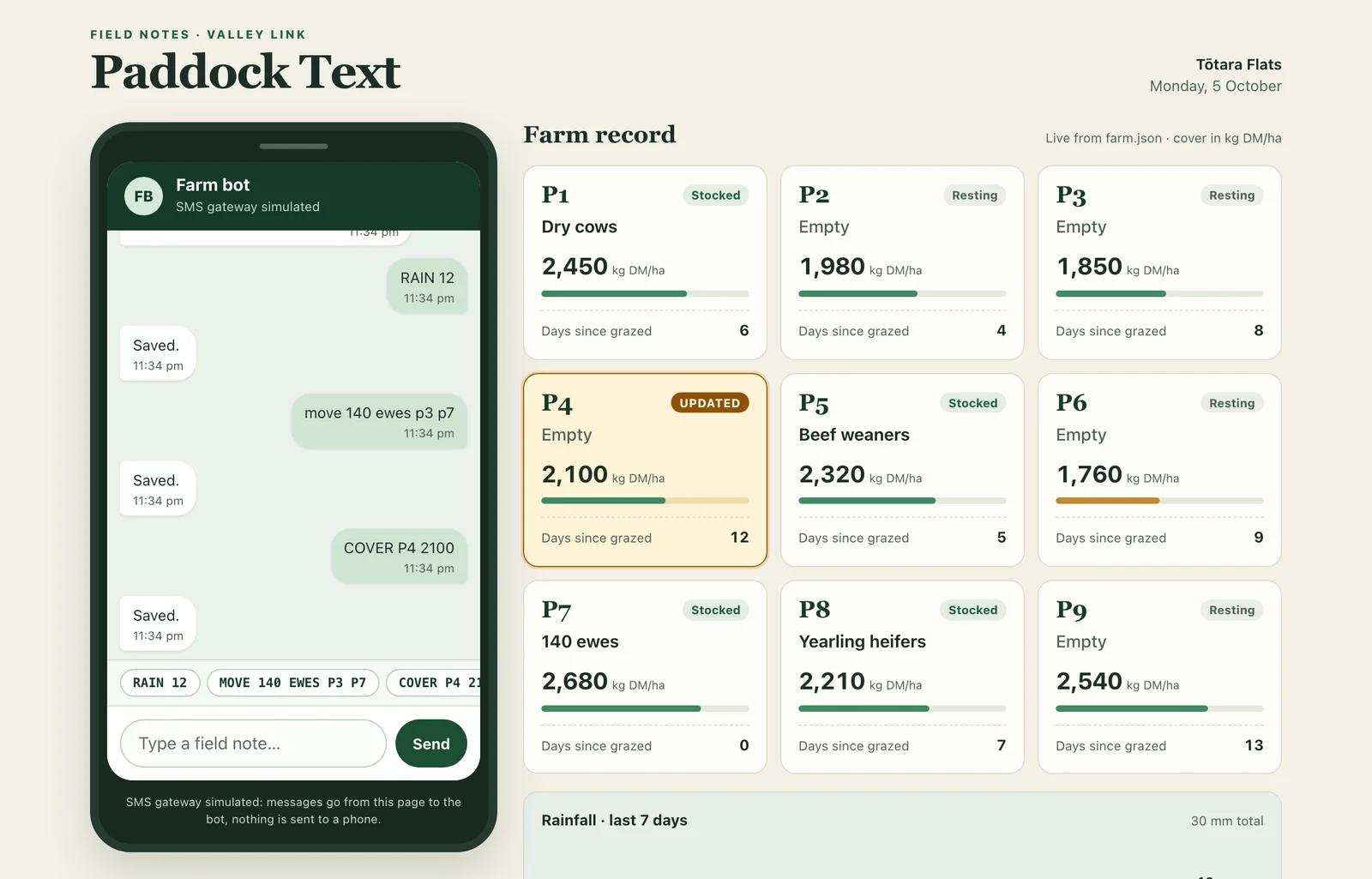
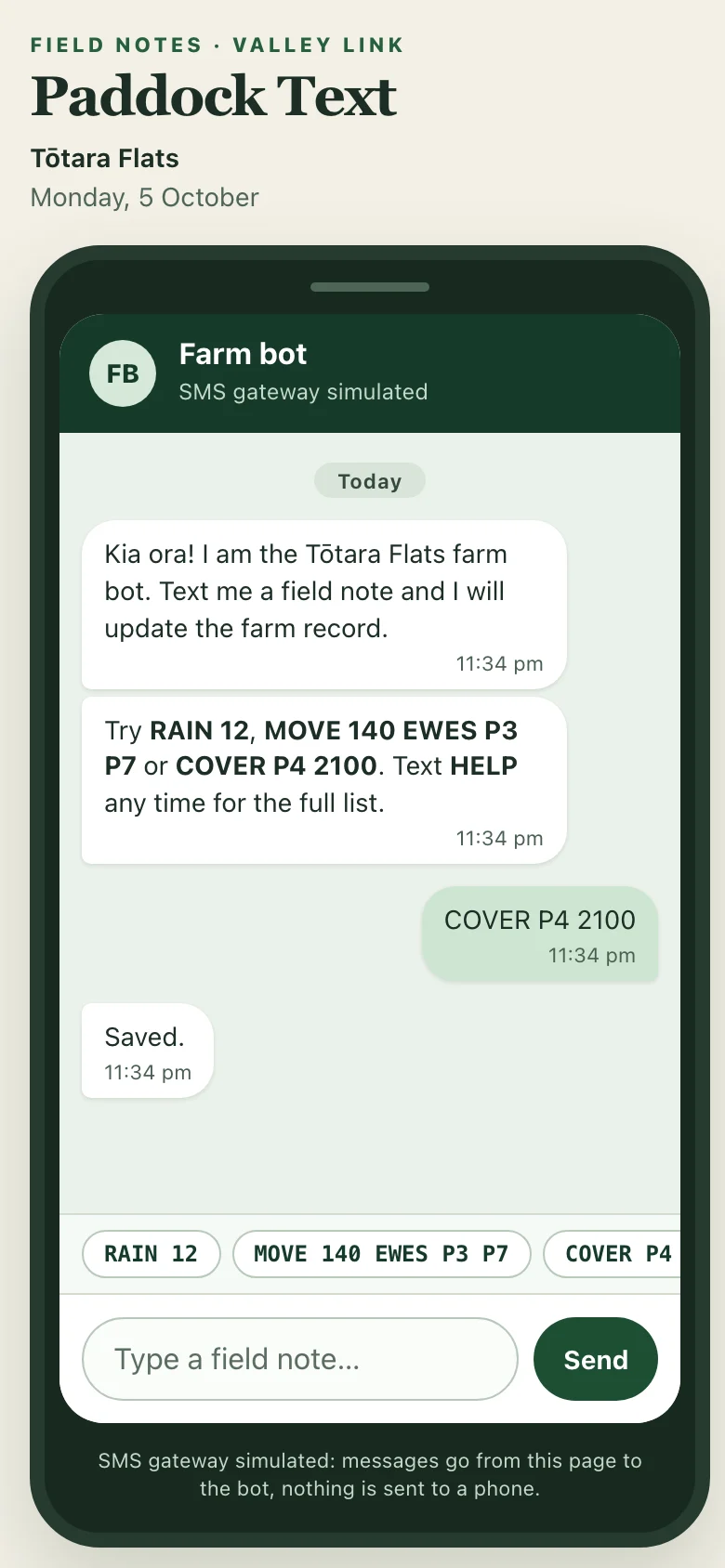
- Text RAIN 12, MOVE 140 EWES P3 P7 or COVER P4 2100 and get a confirmation back in under 160 characters.
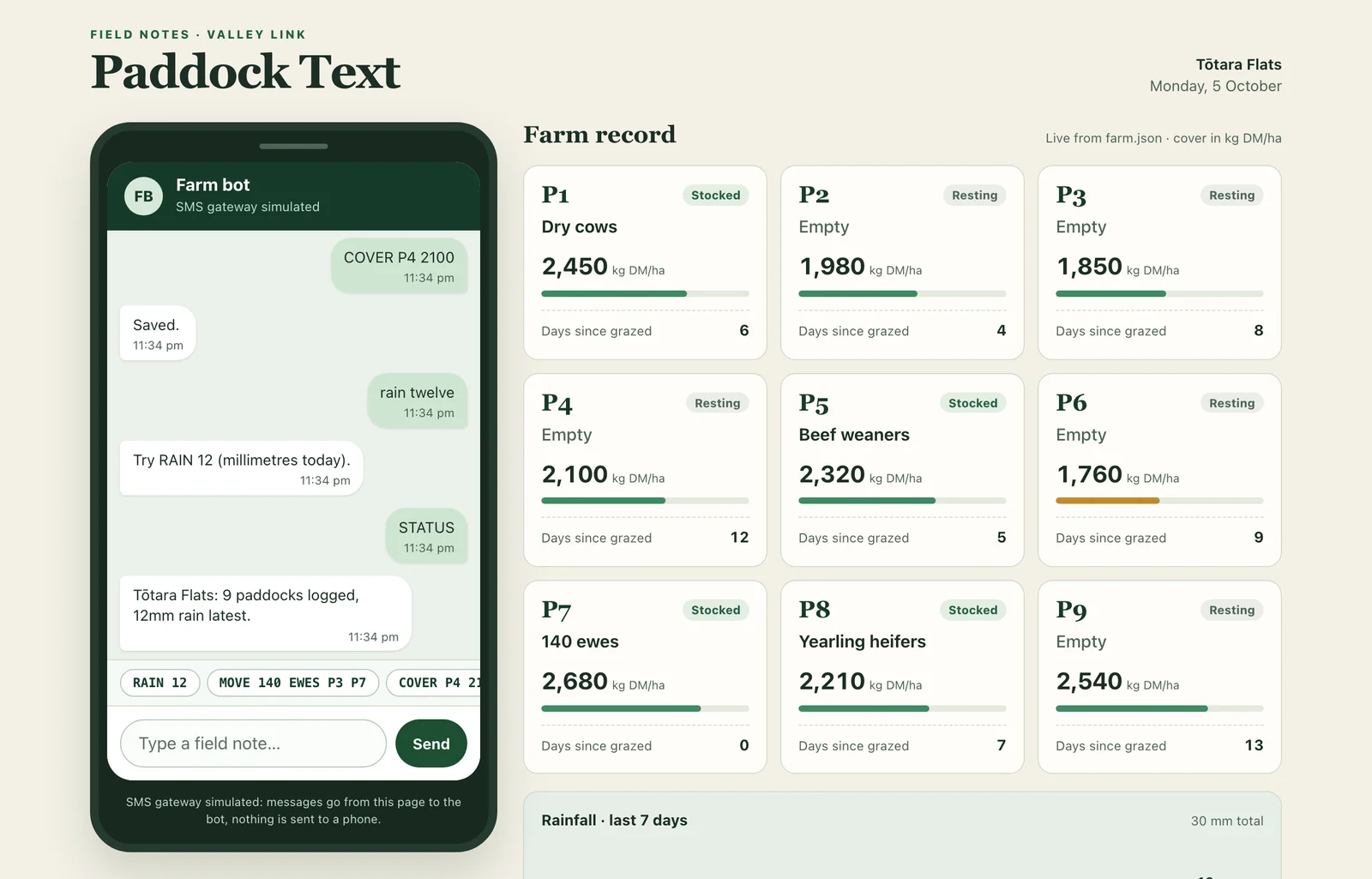
- A text the bot cannot read gets a reply with the nearest valid example. UNDO takes back the last entry.
- STATUS answers with a one-line summary of the farm.
- Beside the phone, the farm record shows each paddock’s stock, cover and days since grazing, with the last week of rain.
What is real and what is simulated
| SMS gateway | Simulated: the page posts to the bot the way an SMS provider would; nothing reaches a phone |
|---|---|
| Farm record | A local file holding an invented farm, Tōtara Flats |
| A real number | Needs an SMS provider and a webhook |
How far we took it
- Unit tests cover the parser and every reply, including texts it cannot read.
- For this page we sent five texts through the simulator, one of them wrong on purpose, and captured the result.
Screens
What happens next
Before any more building: give three farmers a card with the six commands and read a week of their texts. If the codes drift, the parser gets looser or the idea changes.